Start with the right tool
A plunger is the most useful tool in the house. Use a cup plunger on sinks and a flange plunger on toilets. Seal the overflow opening with a wet rag, cover the drain with water and pump steadily for 20 to 30 seconds.
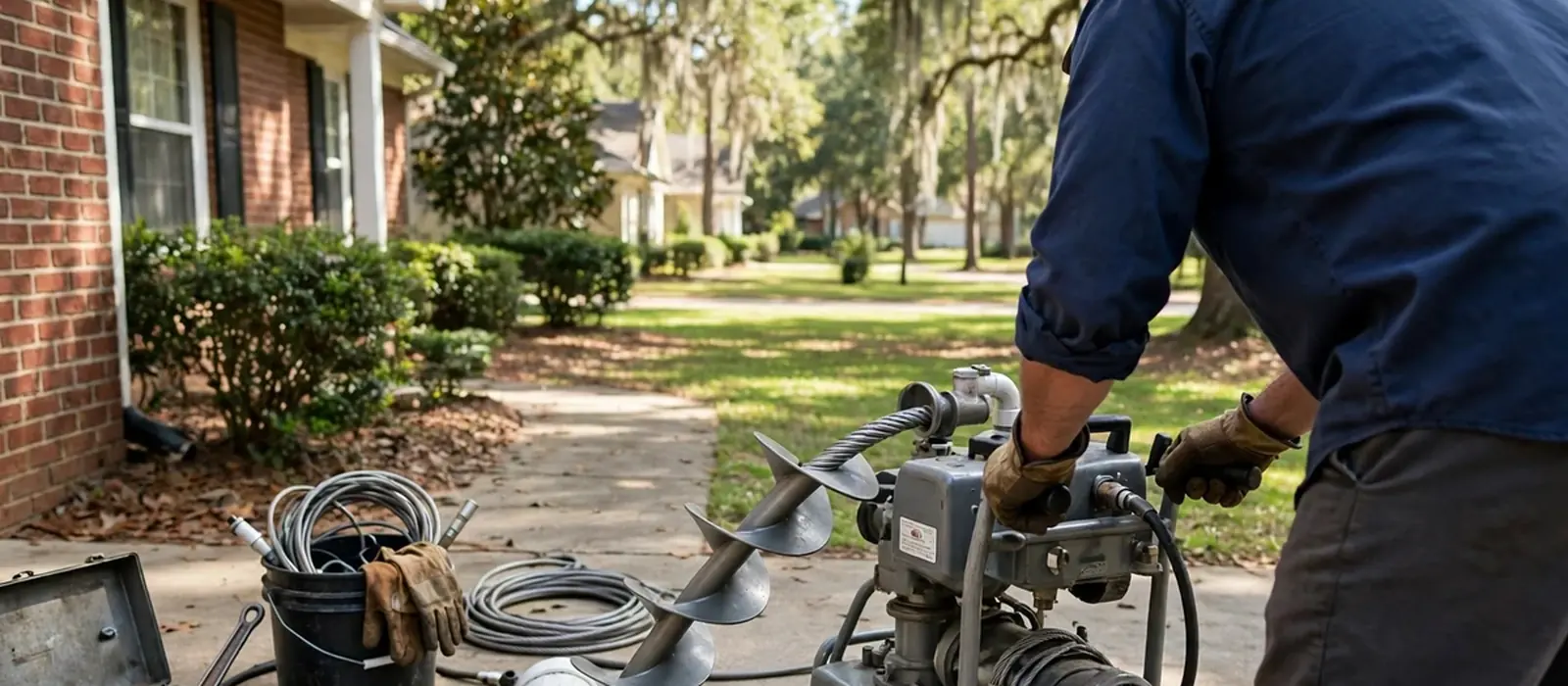
A small hand auger, sometimes called a drain snake, reaches farther. Feed it in until you feel resistance, turn the handle to break it up or hook it and pull back slowly. Wear gloves, because what comes out is not pleasant.
What works and what does not
| Method | Works on | Caution. |
|---|---|---|
| Plunger | Sink, tub and toilet clogs | Needs a good seal. |
| Hot water flush | Light grease film in kitchen drains | Do not pour boiling water into porcelain or PVC joints. |
| Baking soda and vinegar | Light odor, minor film | Rarely clears a real clog. |
| Hand auger | Hair and soap near the trap | Can scratch tubs if forced. |
| Dish soap and hot water | Grease slow-downs | Run for several minutes. |
| Chemical drain cleaner | Rarely recommended | Can burn skin and harm pipes. |
Baking soda and vinegar fizz, but the reaction is mostly foam. It can freshen a drain but it seldom moves a solid blockage.
Why chemical cleaners cause trouble
Caustic cleaners generate heat. In a full pipe they can sit against the pipe wall and soften plastic or damage old metal. They are also a hazard to anyone who comes to clear the drain afterward, because standing liquid can splash.
If you already poured some in, tell the plumber. They will wear protection and handle the drain accordingly. For a safer approach to stubborn clogs, our drain cleaning page explains cable and jet methods.
When it is not a clog
- Several fixtures drain slowly at the same time.
- A toilet gurgles when the washer drains.
- Water backs up in a floor drain or tub.
- The slow drain comes back within days.
These point past the trap to the main line. Tree roots, grease buildup or a broken pipe are common causes. Read about sewer line cleaning if you see these signs, and call the 24/7 line if sewage is coming up.
Drains in Los Lunas and nearby towns
Roots from cottonwoods and other thirsty trees along the bosque are a frequent cause of repeat sewer clogs in the valley. A homemade fix will not stop them. In Bosque Farms, larger lots mean longer laterals and more chances for roots to enter a joint.
In Peralta, many homes use septic or grinder pumps. Never use chemical cleaners or flush wipes in these systems, since they can harm the tank or clog a pump.
Habits that keep drains clear
Put a hair catcher in the shower and tub. Wipe greasy pans with a paper towel before washing. Collect cooking grease in a jar and throw it away. Run hot water for a few seconds after using the sink.
Do not flush wipes, even those labeled flushable. They tangle in pipe and in pumps. These small habits prevent most calls we receive.
Step by step: clearing a kitchen sink at home
- Remove standing water with a cup if the sink is full.
- Run hot tap water and a squirt of dish soap for a minute to loosen grease.
- Plunge with a sealed cup plunger, with the other basin plugged.
- Open the trap under the sink over a bucket and clean it out.
- Reassemble, run water and check for leaks at each joint.
If you share a double sink with a disposal, plug the dishwasher line and the second drain before plunging. Otherwise the pressure escapes to the wrong place.
Clearing a tub or shower drain
Hair is the cause in nearly every tub clog. Pull the stopper or strainer and remove what you can reach. A plastic drain-clearing strip with barbs, sold at hardware stores, pulls out hair far better than a plunger.
Run hot water after you finish and test the flow. If it is still slow, the blockage is likely farther down the line, where a cable machine reaches. Our crews use these on every drain cleaning visit.
When a clog comes back within weeks
A drain that clogs again right after you clear it has a cause that your fix did not touch. Common reasons are a pipe with a low spot, a rough joint that catches debris or roots entering from outside.
A camera look answers the question. It takes less time than repeating the same fix every month, and it shows whether you need cleaning, repair or nothing more than a habit change.
A note on safety
Wear gloves and eye protection when you open a trap or work with a cable. Never mix cleaning products, because some combinations release harmful fumes. If you smell a strong odor, open windows and leave the area.
Keep children and pets away from open traps and standing water.
What to buy for a basic kit
- A cup plunger and a flange plunger.
- A small hand auger, about 25 feet.
- Rubber gloves and safety glasses.
- A bucket and old towels.
- A flashlight.
- A hair catcher for each shower and tub.
These items cost far less than a single service call, and they handle most minor clogs. Keep them in one place so you can reach them when a drain slows at night.
Drains in rentals and shared homes
If you rent, check your lease before you do anything beyond a plunger. Landlords often prefer to be told about a slow drain. If you manage a rental, give tenants a simple note about wipes, grease and hair catchers.
Shared drains in duplexes and small buildings can back up into the lowest unit. Report a main line problem right away.
Where the code comes in
Traps, vents and cleanouts are all part of the Uniform Plumbing Code (UPC). If a trap is the wrong shape, a vent is missing or a drain has no cleanout, the clog keeps returning. That is a repair, not a cleaning problem.
Drain clog questions
It can help with grease in a metal pipe. It can damage PVC joints and cracked porcelain, so use very hot tap water instead.
Yes, it is safe, but it rarely clears a real blockage.
If a plunger and a snake fail, or more than one drain is slow, call.
Avoid it. Harsh chemicals can harm the bacteria and the tank.
Yes. See Belen.