
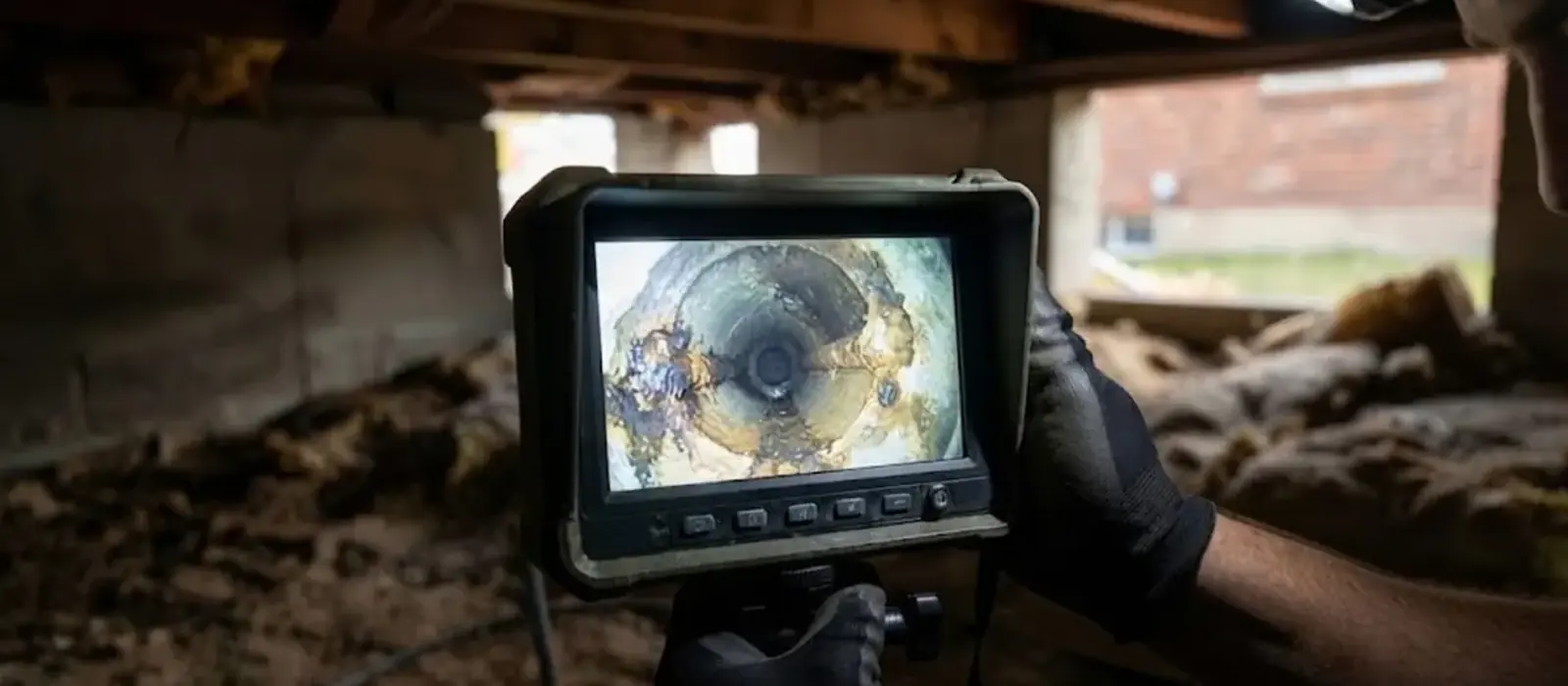
Three good reasons to inspect the line
- You are buying a house and want to know the condition of the line before closing.
- The same drain has clogged more than once.
- You are planning a remodel, an addition or landscaping that sits over the sewer path.
In all three cases, a camera replaces guesswork. For buyers, it turns a hidden risk into a documented condition. For repeat clogs, it tells you whether the cause is grease, roots or a broken pipe. For remodels, it shows where the line really runs.
What the plumber sees on the screen
The camera head has lights and a lens. As it moves down the line, the plumber narrates what is visible. Normal pipe shows a smooth, continuous wall. Problems show up as cracks, joint offsets, roots coming through seams, scale or grease coating and low sections where water stands.
| Finding | What it means | Next step. |
|---|---|---|
| Smooth, clear pipe | No visible defect | No action needed. |
| Root intrusion at joints | Pipe is open at the joint | Jet the roots, plan a spot repair if joints are cracked. |
| Offset or separated joint | Pipe sections have shifted | Spot repair or lining depending on length. |
| Standing water in a belly | Low spot where waste collects | Often needs section replacement. |
| Heavy scale or grease | Reduced pipe diameter | Hydro jetting. |
| Collapsed pipe | Line is failing | Replacement. |
A good inspection ends with a recording or images you keep. Ask for them. They are useful for negotiations, insurance questions and future plumbers.
Reading the report: repair, monitor or ignore
Not every finding needs action. A slight offset in an old pipe that flows well may only need to be watched. A cracked joint with roots will keep causing problems. The plumber should tell you which category each defect belongs to and what it will cost if you wait.
If the camera shows a problem, the next step is covered on our sewer line repair page. If it shows buildup and nothing broken, sewer line cleaning is the right service.
Inspecting a house in Los Lunas, Bosque Farms or Belen
Houses in the Rio Grande valley range from old farmhouses to recent subdivisions, and the pipe material and age vary widely. A camera is the only way to know for sure what is in the ground. Ask the sellers or their agent where the cleanout is, and whether the house is on the Village sewer or a septic system.
If the house is on septic, a camera can check the line to the tank, but the tank and drain field need their own evaluation. Septic systems are regulated at the state level, so ask the seller for the system’s records.
What affects the cost of a camera inspection
The plumber quotes before starting.
Length of line
A longer run takes more time and cable.
Access point
A good cleanout makes it quick. Pulling a toilet adds time.
Line condition
Heavy buildup may need cleaning before the camera can pass.
Recording and report
A written summary and saved video add value for buyers.
Scheduling
Planned visits are scheduled during normal hours.
Camera inspection is a diagnostic service and is not covered by homeowner insurance. If the camera finds a covered loss, the policy may respond to the repair. Want your real number? Call and tell the dispatcher about the property.
Need a camera on your sewer line?
Call to schedule an inspection. Same-day appointments are offered when available.
Why a camera report is a useful record
A camera inspection does not repair anything, but it documents pipe material, slope and defects against what the Uniform Plumbing Code (UPC) expects of a sound drain. Keep the video and the written summary with your home records.
Camera inspection questions
Most inspections take about an hour, depending on access and the length of the line.
Yes, it can show where the blockage is and what it is made of. If the line is blocked, it may need to be cleared first.
Many buyers do, especially for older homes. It shows hidden defects that a standard inspection may not.
Most houses have one. If not, the plumber can access the line through a toilet or a roof vent.
Ask when you book so the visit is planned to capture it.
No. A camera looks. Jetting cleans. See hydro jetting for the cleaning side.