
Who owns the lateral
The Village of Los Lunas Water Division operates the sewer system, and the public main in the street is the village’s to maintain. The lateral, from the building to the connection at the main, belongs to the property owner.
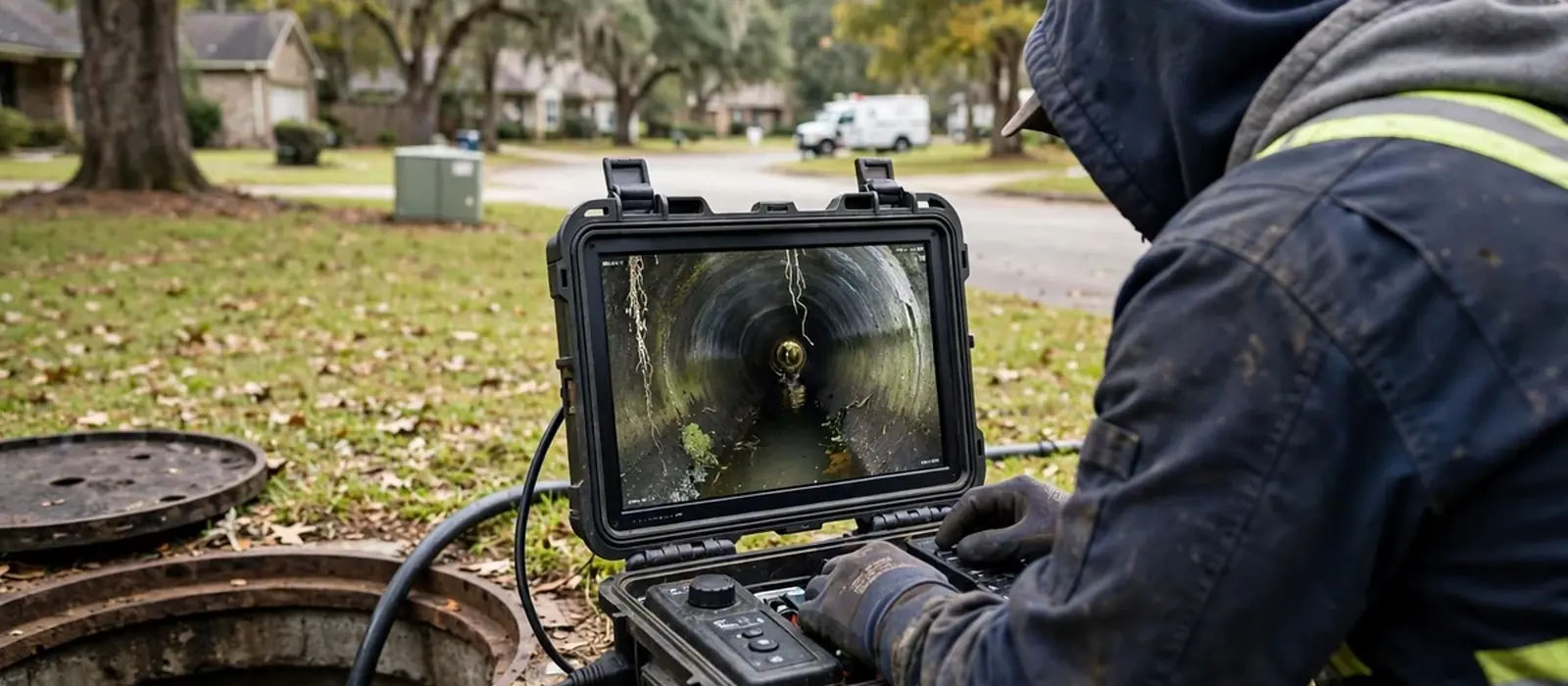
If you are unsure where your lateral ends, a camera inspection records the distance and the location of the connection. That also helps if you need to talk to the village about a blockage in the main. See sewer inspection for how it works.
Signs the lateral is failing
- Repeated backups in the lowest drains of the house.
- Gurgling from toilets when water drains elsewhere.
- Sewage smell in the yard or the basement.
- A wet or sunken patch in the lawn over the pipe line.
- Slow drains throughout the house that clear briefly after cabling.
These signs fit a clog, and a clog is the more common cause. When cabling fixes the problem for only a few weeks, ask for a camera look before the next cleaning.
Repair methods compared
| Method | How it works | Fits when. |
|---|---|---|
| Spot repair | Dig to the damage and replace a section | One short failure. |
| Pipe lining | A resin liner cures inside the existing pipe | Cracks over a longer run, pipe still round. |
| Pipe bursting | New pipe pulled through as the old one breaks apart | Full replacement with limited digging. |
| Open trench replacement | Dig the full length and install new pipe | Collapsed or badly bellied pipe. |
Lining and bursting reduce digging but need entry points, and both depend on the pipe condition. The camera report decides which options are available.
The cost conversation
We do not list dollar figures here, because prices depend on depth, length, surface and method. What helps is knowing what drives the price: how deep the pipe is, how long the damaged run is, what lies above it and how the repair method fits the pipe.
Ask for a written scope that names the method, the restoration and who pulls any permit. If a plumber quotes without a camera look, ask why.
Laterals in the Rio Grande valley
Roots are the local story. Cottonwoods and willows along the river look for water, and a joint that weeps a little is an invitation. Roots can enter a lateral and fill it within months. Cutting them clears the line, but only a repair stops the entry.
In Belen, older clay and cast iron laterals are common near downtown, and they fail at joints. In Bosque Farms, long laterals on larger lots give roots a longer path. Our sewer line repair page covers the repair visit in detail.
Permits and licensing
Sewer work requires a licensed contractor in New Mexico, and permits are issued through the state Construction Industries Division. Work in the public right of way may involve the village. Ask your plumber who handles each approval.
Verify the contractor on the state license lookup. Classifications that apply to sewer and septic include MS-3. Do not hire anyone who cannot show a license.
Insurance and the lateral
Homeowner policies often exclude sewer lateral damage from roots or age. Some offer an endorsement for service lines. Check your policy before an emergency, not during one.
If a backup damages your floors, ask whether your policy has water backup coverage. Photograph everything before cleanup.
What to do the day a lateral fails
- Stop using water in the house, including laundry and dishwashers.
- Do not use drain cleaner, which makes the line hazardous to work on.
- Locate the cleanout cap outside and keep it clear.
- Call a plumber and describe which drains are backing up.
- Photograph any sewage that reaches the floor for your insurer.
Sewage is a health hazard. Keep children and pets out of the affected area and wear gloves if you must enter.
Questions to ask a contractor
Ask whether the quote is based on a camera inspection. Ask which repair methods fit your line and why the plumber prefers one. Ask who handles the permit and who restores the yard or driveway.
Ask for the camera recording and a written scope. If a contractor refuses, that tells you something.
Preventing the next failure
After a repair, protect the line. Do not plant trees near the lateral path, and choose shrubs with shallow roots instead. Keep wipes, grease and food scraps out of the drain. Schedule a camera look every few years if your property has mature trees.
If the repair involved lining, ask for the manufacturer’s warranty paperwork. Keep it with the camera footage and the permit. These documents help at resale and if a problem returns.
Selling or buying a home with a lateral problem
A camera report on the lateral can be a negotiating tool for both sides. Buyers can ask for a repair or a credit. Sellers can repair first and show the footage. Either approach works better than a surprise at closing.
Ask your agent whether local sale practices call for a sewer inspection. A plumber can provide a written report with footage that you can attach to the file.
Documenting the work
Ask for the final camera footage after the repair, the permit and the invoice. Store them with your home records. If you sell, a buyer or an inspector may ask to see them.
Note the date and the method on a simple sheet. If you installed a liner, record the length and the manufacturer. If a problem appears later, the information makes the next diagnosis quicker.
When the problem is in the public main
If a camera shows a clean lateral and a blockage past the property line, the village Water Division is the right call. Report it with the address and a description of the symptoms. The plumber can give you the footage and the distance to the connection.
Do not assume the main is always the cause. Most backups in a single home come from the home’s own lateral.
Code and sewer repairs
Sewer laterals follow the 2021 Uniform Plumbing Code (UPC) as adopted in New Mexico, including pipe material, slope and cleanout placement. The permit and inspection are what document that the repair was done to those rules.
Sewer lateral questions
The lateral from your building to the main is the owner’s. The village maintains the public main.
Sometimes. Lining and bursting limit digging, depending on pipe condition.
A camera shows roots directly. Repeat clogs are a clue.
Usually. Permits come from the state Construction Industries Division.
Yes. See Rio Communities.