
How the method works
The plumber drains the line, isolates the section being tested and fills it with a mix that contains hydrogen or helium. Both are lighter than air and move up through soil, concrete and flooring. A handheld sensor sweeps the surface and picks up the gas where it reaches the surface.
The mixes used for leak work are non-toxic and not flammable in the concentrations used. The plumber follows the product instructions and ventilates the space.
When it is the right tool
| Method | Best for | Limits. |
|---|---|---|
| Acoustic listening | Pressurized leaks that make sound | Weak on plastic pipe and quiet leaks. |
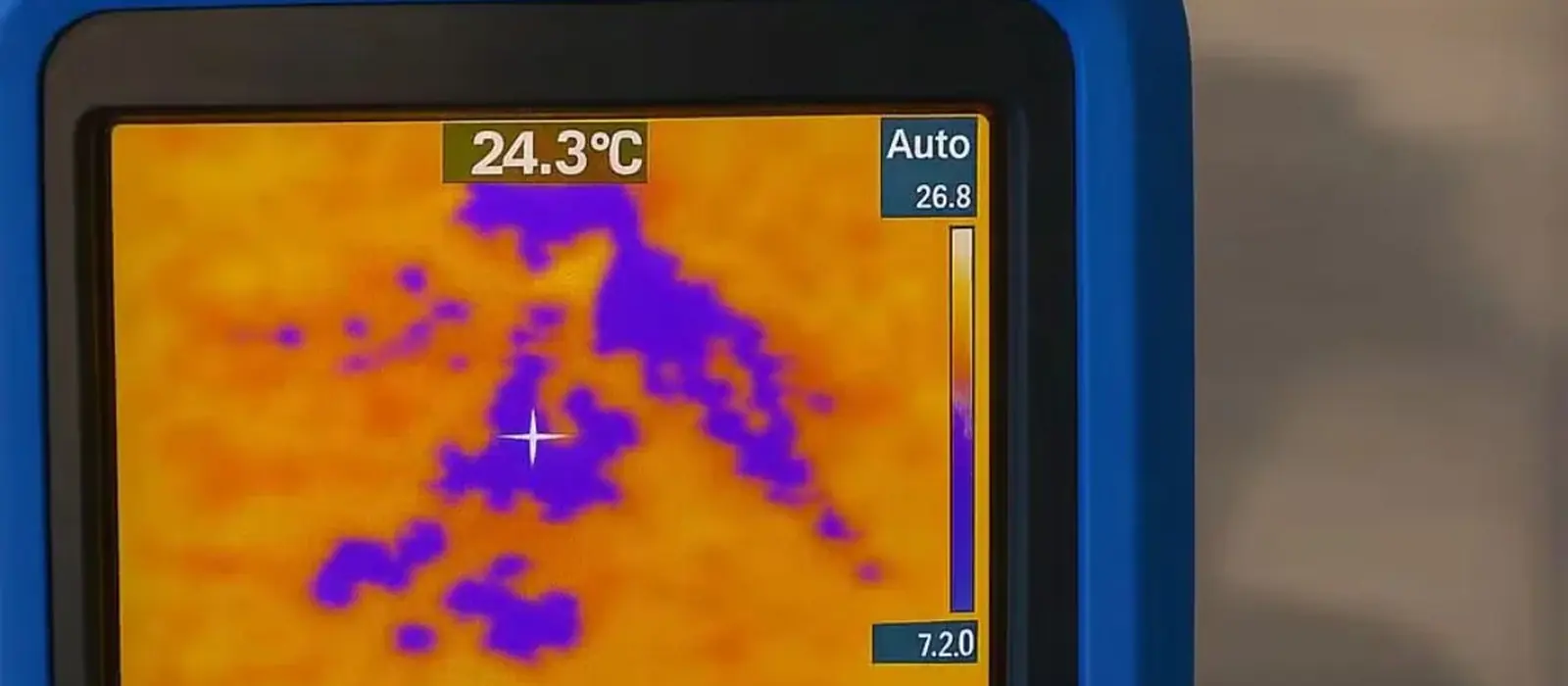
| Thermal imaging | Hot water line leaks warming a slab | Needs a temperature difference. |
| Pressure testing | Confirms a leak exists on a section | Does not locate it. |
| Tracer gas | Quiet or small leaks, drain and supply lines | Needs the line isolated and drained. |
| Moisture mapping | Wet walls and floors | Shows where wet, not where from. |
No single tool wins every time. A good plumber starts with the simplest and uses the others to confirm.
What a visit looks like
- Meter test and pressure test confirm a leak.
- Water is shut off and the suspect line is drained.
- The line is capped and filled with tracer gas.
- The sensor sweeps floors, walls and the yard along the path.
- The plumber marks the spot and confirms with a second method.
- The repair plan is explained with a clear price.
The process takes a few hours for most houses. Tell the dispatcher about any floor coverings or built-ins so the plumber can plan access.
Why locate before you cut
A wrong guess means a wrong hole. Locating the leak first limits damage to tile, cabinets and concrete. It also lets the plumber compare a spot repair with a reroute, which is covered on our slab leak repair page.
On a sewer or drain line, the same gas method can find a crack that a camera misses, as long as the line is sealed. See sewer line repair for what follows.
Where it helps around Los Lunas
Many valley homes sit on slabs, and the supply lines under them may be copper or older material. A pinhole in copper often leaks quietly, which is a good case for tracer gas. Hard groundwater in the Santa Fe Group aquifer can wear on pipe over decades.
In Peralta, a well home with a pump that cycles often may have a buried leak between the well and the house. In Bosque Farms, long service lines on larger lots make a precise locate even more valuable.
Questions to ask before booking
- Which locating methods do you use and in what order?
- Do you give me the location in measurements from a fixed point?
- Is the price for locating separate from the repair?
- What happens if the first method does not find it?
A plumber who explains these in plain terms is easy to trust. If they only say they will start digging, get another opinion.
Limits and honest expectations
No method finds every leak on the first try. A very small leak in a deep line, a cracked pipe under thick concrete or a leak that only opens under pressure can test a plumber’s patience. Sometimes two methods are needed to confirm the spot.
A good plumber tells you this up front and explains what they will do if the first sweep shows nothing. That might mean retesting a different section or rechecking with sound equipment.
Preparing your home for the visit
- Clear furniture and rugs from the suspected area.
- Tell the plumber where you have heard sound, seen damp spots or felt warm floors.
- Know the age and type of piping if you can.
- Have the meter location ready.
- Plan to be without water for part of the visit.
The more you share, the less time the plumber spends searching and the less you pay for labor.
After the locate
Once the spot is marked, the plumber confirms with a second method when possible, then explains your options. That might be a spot repair, a reroute or, if the pipe is old and failing in many places, a repipe.
You decide with the facts on the table. The locating step is worth paying for even if you choose to delay the repair.
Environmental and safety notes
Tracer gases used for leak work are not harmful to the environment in the amounts used and do not leave residue in the pipe. The plumber vents the line after the test and refills it with water.
Because the gas is light and disperses quickly, the visit does not need you to leave your home. Pets and people can stay. Tell the plumber about any respiratory concerns before the work begins.
Choosing between methods when you call
When you call, describe what you see and hear. A sound of running water points to acoustic tools. A warm floor points to thermal imaging. A high bill with no clue points to a pressure test first, then a tracer gas sweep.
The dispatcher can book the right visit if you share these details. It saves a trip and keeps the cost down.
Who needs this service
Several kinds of owners benefit from a precise locate. Some have a high water bill and no visible leak. Others are buyers checking a suspect house, landlords with a repeated stain or owners of slab homes with a warm floor spot.
It also helps when earlier attempts failed. A plumber with the right tools can find what a first visit missed.
What it costs to guess
A wrong guess can mean cutting the wrong floor tile, the wrong wall or a long trench. Each of those costs money and time before the real leak is found. A precise locate is almost always cheaper than a series of exploratory cuts.
That is the business case for good locating tools, and it is why plumbers invest in them.
Following up under the code
After a leak is found, repairs follow the Uniform Plumbing Code (UPC), including approved materials and pressure testing. Ask your plumber how the repaired line will be tested.
Tracer gas questions
The mixes used are non-toxic. The plumber follows safety steps and ventilates.
Yes. The gas rises through concrete to the surface.
Yes, when the line is sealed and drained.
No. A camera sees inside a pipe. Tracer gas finds where gas escapes from it.
Our plumbers choose the method for each job. See Belen for coverage.