
How an electric water heater heats
Most electric tanks have two elements, one near the top and one near the bottom. Each is controlled by its own thermostat. The upper element heats the top of the tank first, then the lower one takes over to heat the rest.
When one fails, the symptoms depend on which one. A dead upper element often means no hot water at all. A dead lower element usually means hot water that runs out quickly.
Signs an element has failed
| What you notice | Likely cause | Next step. |
|---|---|---|
| No hot water | Upper element, upper thermostat or tripped breaker | Check the breaker and reset button. |
| Hot water runs out fast | Lower element failed | Test the lower element. |
| Lukewarm water | Partial failure or thermostat set low | Check settings, then test. |
| Breaker keeps tripping | Shorted element | Stop and call a plumber. |
| Popping or rumbling | Sediment on the element | Flush the tank, inspect elements. |
Hard groundwater is a frequent factor. Scale builds on the element surface and the element burns out sooner than it would in softer water. See our page on water softener and filtration for ways to reduce scale.
Safety before anything else
Turn off the breaker for the water heater. Then confirm the power is off with a voltage tester at the heater. Never rely on the breaker label alone, because circuits are sometimes mislabeled.
Shut off the cold water supply to the tank. Open a hot water faucet nearby so the tank does not form a vacuum. Drain some water below the element level before removing it. Hot water can scald, and a tank that is not drained will spill on the floor.
How the element is replaced
- Cut power at the breaker and verify with a tester.
- Close the cold water inlet and drain part of the tank.
- Remove the access panel and insulation.
- Disconnect the wires and test the element with a meter.
- Unscrew the old element with an element wrench.
- Install the new element with a gasket and tighten.
- Refill the tank completely before restoring power.
- Restore power and check for leaks.
The refill step is the one people skip. Turning power on to an element that is not under water burns it out in seconds. If you are not comfortable with any step, stop and call.
Element failures in Los Lunas homes
Los Lunas homes on village water see mineral scale on any heating surface, and the village states that its supply comes from the Santa Fe Group aquifer through four wells. That is why flushing the tank once a year is worth the thirty minutes.
In Peralta, where homes use private wells, sediment is a bigger concern. A tank with a thick sediment layer may be better replaced than repaired. See water heater replacement to compare.
Repair or replace the whole heater
An element costs far less than a new tank, so replacement makes sense when the tank itself is sound. If the tank leaks, the element is not the problem. Water pooled at the base, rust streaks or a tank that is old with several repairs behind it point to replacement.
A plumber can test the element, thermostat and tank in one visit and tell you which makes sense.
Tools and parts to gather first
- A voltage tester or multimeter.
- An element wrench sized for your element type.
- A replacement element with the same wattage and voltage.
- A new gasket if the element does not include one.
- A garden hose to drain the tank.
- Insulation tape or a replacement panel if the old one is damaged.
Wattage and voltage are printed on the nameplate of the old element and on the tank label. Do not guess. An element with a higher wattage than the tank allows can overheat the wiring.
Testing the element before you replace it
With the power off and the wires disconnected, a multimeter set to resistance tells you the state of the element. A healthy element shows a low but measurable reading. No reading at all means the element is open and needs replacing. A reading to the metal tank means the element is shorted to ground.
If the element tests fine, the thermostat or the upper limit switch is the next suspect. The red reset button on the upper thermostat trips when the water overheats, and pressing it may restore power. If it trips again, something is wrong and a plumber should look.
Flushing while you are in there
The best time to flush sediment is when you already have the tank partly drained. Open the drain valve at the bottom, run the hose to a floor drain or the yard and let it run until the water is clear. Then close it and refill.
Do this once a year. In an area with mineral-heavy groundwater, a yearly flush extends the life of the tank and keeps the elements working with less scale.
Signs you should stop and call
Stop if you see scorched wires, melted insulation or a burning smell. Stop if the tank is leaking from the body, if the breaker trips immediately or if the temperature and pressure relief valve discharges steadily.
These point to problems beyond a worn element. A plumber can test the circuit, the thermostats and the tank in one visit and tell you whether repair or replacement makes sense. Our water heater replacement page explains the options when the tank itself has failed.
Gas versus electric: a quick note
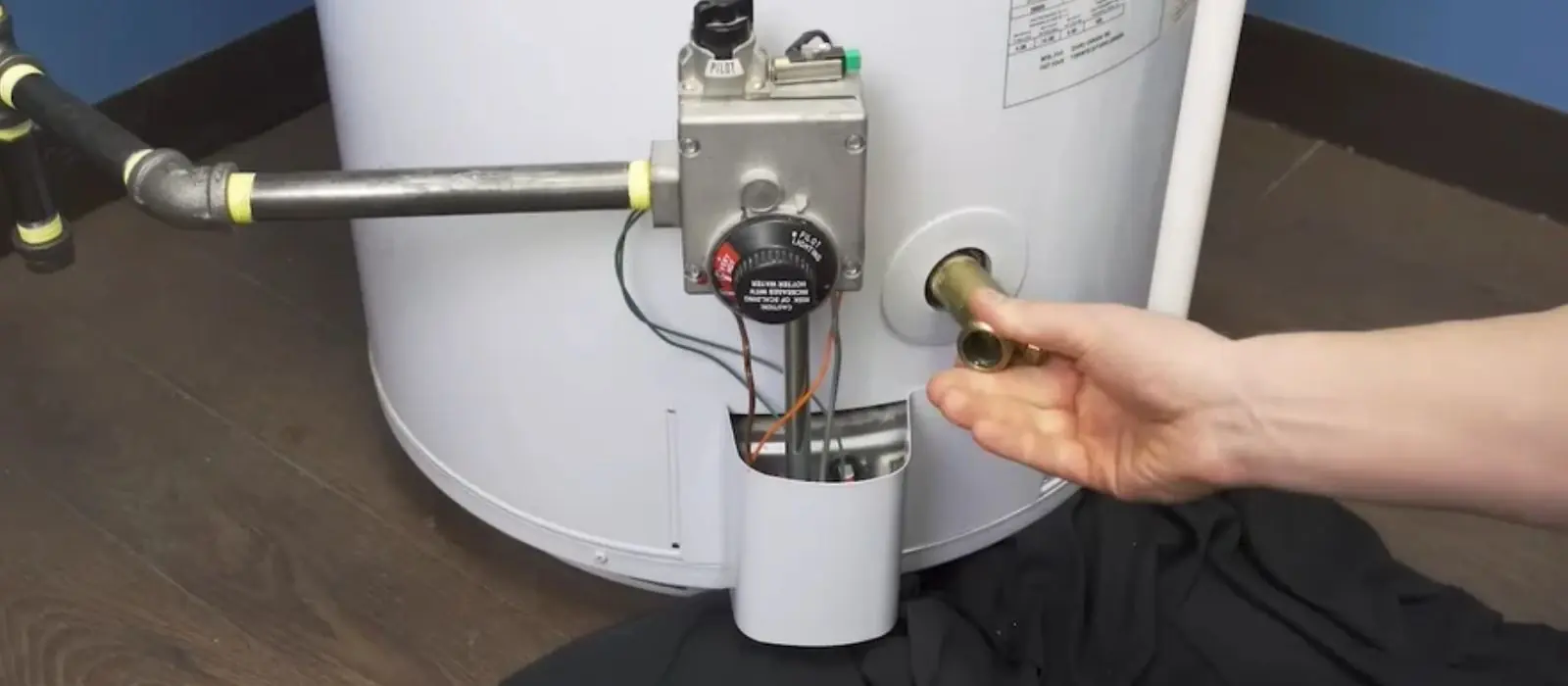
Elements apply only to electric heaters. A gas unit heats with a burner and a thermocouple or igniter, and its problems look different. If your heater runs on gas, the steps in this guide do not apply, and any gas work should be left to a licensed plumber.
If you are unsure which type you have, check the label on the tank or look for a gas line and a flue. Electric tanks have a thick cable entering the side or top.
Why the relief valve matters
Under the Uniform Plumbing Code (UPC), every storage water heater needs a working temperature and pressure relief valve. Test it by lifting the lever briefly, and replace it if it does not seat again.
Element replacement questions
Yes if you are careful with power and water. Many homeowners do. If any step is unclear, call a plumber.
You need to drain below the element level. Draining fully is fine and also flushes sediment.
It depends on water quality. Scale shortens the life.
A shorted element is a likely cause. Stop and call a plumber.
Yes. See Bosque Farms.